A septic system rarely fails without warning. Slow drains, a gurgle after every flush, a smell in the yard or a patch of grass that stays green in August are all ways the system tells you something is wrong. The hard part is knowing what. It might be a tank that's overdue for pumping, a clogged line, or a drainfield that's giving out. Here's how to read the signs.
The warning signs
Washington's Department of Health and EPA list the same core signs of a septic problem:
- Water and sewage from toilets, drains and sinks backing up into the house
- Bathtubs, showers and sinks draining very slowly
- Gurgling sounds in the plumbing
- Standing water or damp spots near the septic tank or drainfield
- Bad odors around the septic tank or drainfield
- Bright green, spongy grass over the tank or drainfield, even in dry weather
- Algae blooms in nearby ponds or lakes
- High levels of nitrates or coliform bacteria in well water
Here's what each one tends to mean.
Drains slowing down all over the house
One slow sink is usually a clog in that sink. When every drain slows down at once, the problem is past the house plumbing: the line to the tank, the tank itself, or the drainfield. Washington's Department of Health notes that a clogged line from the house to the tank can make lower drains slow down first.
Gurgling in the plumbing
Gurgling after a flush or while the washer drains is on EPA's list of common signs of a failing system. It's worth a call before it turns into a backup.
Sewage backing up into the lowest drains
A backup usually shows up first at the lowest drains in the house: a basement floor drain, a lower-level shower, a toilet on the bottom floor. Washington's Department of Health lists several causes, including a clogged outlet baffle or effluent filter in the tank and a drainfield that has failed or is saturated with water.
Odors around the tank or drainfield
A sewage smell near the tank or over the drainfield is a warning sign. A smell up by the roof is not always one. EPA explains that the roof vent lets the system's pressure equalize, so some odor there can be normal. Vents can also clog with leaves or freeze during long cold spells, and that can push odors inside or around the house.
Wet, soggy ground or standing water
Ground that stays soft and wet over the tank or drainfield when it hasn't rained is one of the clearest signs. EPA calls soft, wet or spongy soil around the drainfield, especially when there's been no significant rain, a good indication of system failure.
Bright green grass over the drainfield in dry weather
In a dry Eastern Washington summer, a stripe of lush grass over the drainfield stands out. Both EPA and Washington's Department of Health list bright green, spongy grass over the tank or drainfield, even during dry weather, as a sign of failure. The Department of Health ties it to a drainfield that has failed or is saturated, often along with wet, soggy ground.
An alarm on a pump tank
Systems with a pump tank usually have an alarm, often a light, a buzzer or both. An alarm on a pump tank is an emergency. Cut water use and call.
Problems you can't see
Washington's Department of Health also lists algae blooms in nearby ponds or lakes and high nitrate or coliform levels in well water. If you have a well near your septic system and a water test comes back with either, the septic system is one place to look.
Full tank, clogged line or failing drainfield?
The same symptom can have different causes. Washington's Department of Health lays out the common ones.
| What you notice | Common cause | What it usually takes |
|---|---|---|
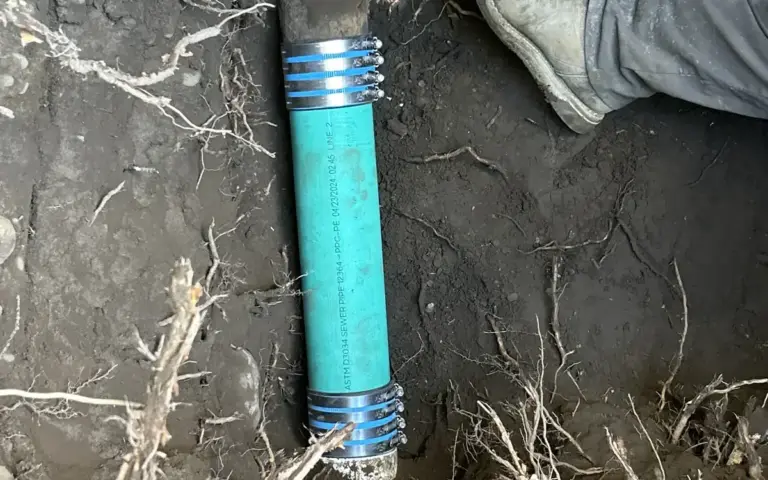
| Drains slow or stop, sometimes lower drains first | The pipe from the house to the tank is clogged | Often an easy fix: snaking the line. A crushed or root-damaged pipe means replacing a section. |
| Same as above | The inlet baffle in the tank is blocked | A relatively easy, low-cost fix |
| Sewage backs up into the house or surfaces near the tank | The outlet baffle or effluent filter is clogged | Cleaning or replacing the filter, or pumping the tank to find and clear the clog |
| Backups, soggy ground and bright green grass over the drainfield, odors | The drainfield has failed or is saturated | A professional assessment. A saturated field can sometimes be dried out. A failed one needs repair or replacement. |
A tank that's overdue for pumping sits behind several of those. When sludge and scum fill the tank, solids start leaving with the liquid, and they plug the outlet, the filter and eventually the drainfield. That's why the fix for most of these signs starts with opening the tank and measuring what's in it.
How to tell if your septic tank is full
You can't tell for sure from the house. The only way to know is to open the tank and measure. EPA's rule of thumb: a tank should be pumped when the bottom of the scum layer is within six inches of the bottom of the outlet, when the top of the sludge layer is within 12 inches of the outlet, or when sludge and scum together take up more than 25 percent of the liquid depth.
If you know when the tank was last pumped, you can get close without opening it. Our pumping frequency chart and the Pump Check tool estimate when a tank your size, with your household, fills its working space.
What to do right now
- Use as little water as you can. Every flush, shower and load of laundry goes into a system that has nowhere to send it.
- Don't pour in drain cleaner. EPA and Washington's Department of Health both say to avoid chemical drain openers. They won't move solids in a septic tank, and they can harm the system.
- Stay out of the sewage. EPA advises avoiding contact with sewage that has backed up, because it can carry harmful pathogens. Keep kids and pets away from wet areas in the yard.
- Don't open the tank yourself. Penn State Extension warns never to enter a septic tank for any reason, because the gases inside can kill.
- Call. Washington's Department of Health notes that a quick response may save money in repairs.
When it's an emergency
Sewage backing up into the house, sewage surfacing in the yard, and an alarm on a pump tank are emergencies. Slow drains are a warning, not an emergency yet, but call either way. Someone answers our phones 24 hours a day, seven days a week, and our emergency page covers what to do while you wait.
If sewage did back up into the house, EPA's guidance is to avoid contact with it and contact your local health department. People cleaning up should wear protective gear like long rubber gloves. Afterward, disinfect exposed areas and items with a mix of 90 percent water and 10 percent household bleach, and don't use the area until it has been completely dry for at least 24 hours.
Why it pays to act early
Penn State Extension explains that by the time sewage backs up into a home, the soil under the drainfield is often clogged with a nearly impermeable layer called a biomat, and pumping the tank alone won't remove it. Washington's Department of Health puts the cost side plainly: routine maintenance runs a few hundred dollars every few years, while repairing or replacing a failed system can cost thousands.
How to stay ahead of it
- Pump on schedule. See How often should you pump a septic tank.
- Keep up with inspections. Washington requires a system that's only a septic tank and a gravity drainfield to be inspected at least every three years, and every other system every year.
- Watch what goes down the drain. See What not to flush on a septic system.
- Protect the drainfield. See Septic drain field maintenance in Eastern Washington.
Seeing one of these signs?
Cut water use and call. Someone answers 24 hours a day.