The rule fits on a sticky note: only human waste and toilet paper go down the toilet. That's how EPA puts it, and Washington's Department of Health says nearly the same thing, adding the soap you wash with. Everything else either clogs the system, fills the tank faster, or harms the bacteria that make a septic system work. Here's the full list, the reasons behind it, and the questions people ask most about wipes, bleach and toilet paper.
Why it matters more on a septic system
On city sewer, what you flush becomes the treatment plant's problem. On a septic system, it stays on your property. Wastewater flows into the tank, where heavy solids sink and lighter material floats. The liquid in the middle flows out to the drainfield, and the soil finishes treating it.
Penn State Extension sorts what goes into a tank into three kinds of solids:
- Biodegradable solids, like human waste, which bacteria in the tank break down
- Slowly biodegradable solids, like toilet paper, which take a long time to break down
- Non-biodegradable solids, like cat litter and plastics, which don't break down at all and fill the tank quickly
The more of the second and third kinds that go in, the sooner the tank fills and the more often it has to be pumped. Things that don't belong can also clog the line to the tank and the inlet baffle. And when solids escape the tank, they head for the drainfield, the most expensive part of the system to replace.
Never flush these
This list combines what EPA, Washington's Department of Health and Penn State Extension say never to flush.
Wipes of any kind, including "flushable" ones
Baby wipes, cleaning wipes, disinfecting wipes and moist towelettes all stay out of the toilet. Penn State Extension's list says it directly: even wipes labeled "flushable" on the package. Washington's Department of Health says never to flush baby wipes, cleaning wipes or any moist towelettes. Wipes belong in the trash can.
Paper that isn't toilet paper
Paper towels, facial tissues, napkins and newspaper are all on the lists from EPA, Washington's Department of Health and Penn State. So are rags and mopping cloths.
Personal and medical products
- Feminine hygiene products, including tampons and pads
- Diapers
- Condoms
- Cotton balls and swabs
- Dental floss
- Bandages
- Hair
All of them go in the trash.
Cat litter
EPA and Washington's Department of Health both list cat litter, and neither makes an exception for litter sold as flushable. Penn State uses it as the example of a solid that never breaks down and fills a tank quickly.
Cigarette butts
EPA and Washington's Department of Health both list them.
Medications
EPA lists pharmaceuticals. Washington's Department of Health lists prescription medication and recommends a medication take-back program instead.
Household and garage chemicals
Gasoline, oil, pesticides, antifreeze and paint never go down a drain or toilet. Washington's Department of Health points to the Department of Ecology's 1-800-RECYCLE line to find local hazardous waste drop-off sites.
The odd ones
Penn State's list also includes toilet bowl scrub pads, plastics of any kind and aquatic pets. If it isn't human waste or toilet paper, it doesn't go in.
Think at the sink
Everything that goes down the kitchen sink, the tub and the utility sink ends up in the same tank. EPA calls this "think at the sink," and Washington's Department of Health gives the same advice.
Grease and cooking oil
Never pour grease or cooking oil down the drain. Washington's Department of Health suggests letting it cool and harden, then throwing it in the trash. EPA's broader list of greases includes fats, butter, wax, cheese and heavy cream.
Coffee grounds and food scraps
Coffee grounds are on EPA's never-flush list, and EPA says not to pour them down the drain either. Penn State adds eggshells, nutshells and leftover food.
The garbage disposal
A garbage disposal sends food solids straight into the tank. EPA recommends eliminating or limiting its use, and says that if you use one, your tank will need to be pumped more often. Oregon State University Extension goes further and doesn't recommend disposals on septic systems at all, because they add solids.
Chemical drain openers
When a drain clogs, skip the chemical drain opener. EPA and Washington's Department of Health both recommend boiling water or a drain snake instead. Washington's septic rules also prohibit putting strong acids, strong bases or chlorinated solvents into a septic system to clean it.
Paint and solvents
Never pour oil-based paint, solvents or large volumes of toxic cleaners down the drain. EPA and Washington's Department of Health both say even latex paint waste should be kept to a minimum.
What happens when the wrong things go in
Washington's Department of Health traces two of the most common septic problems straight back to what gets flushed:
- A clogged line from the house to the tank. Drains slow down, sometimes more on the lower floors, or stop altogether. The department says this is often an easy fix, usually snaking the line, and that you can prevent it by flushing only human waste and toilet paper and keeping up with inspections.
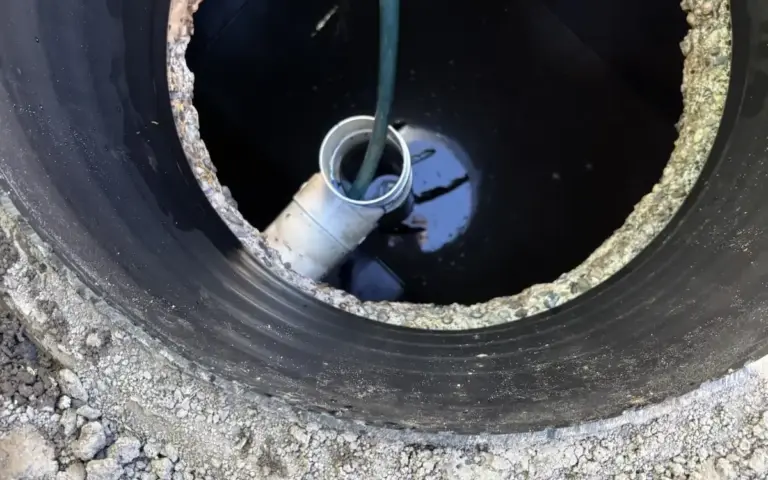
- A blocked inlet baffle. The baffle where wastewater enters the tank gets plugged, and the department mentions toilet paper and other debris as what you'll find. It calls this a relatively easy, low-cost fix, prevented the same way.
Further down the line, the fixes get bigger. When too much solid material makes it out of the tank, the Department of Health says it can cause a drainfield to fail early, and a failed drainfield may need to be replaced.
If something already went down
It happens. A wipe gets flushed, something falls in the toilet, someone pours grease down the sink. A few things to know:
- Don't chase it with chemicals. EPA and Washington's Department of Health both say to skip chemical drain openers and use boiling water or a drain snake on a clogged drain.
- Watch for slow drains or gurgling. Those are early signs of a clog. See Signs your septic tank is full.
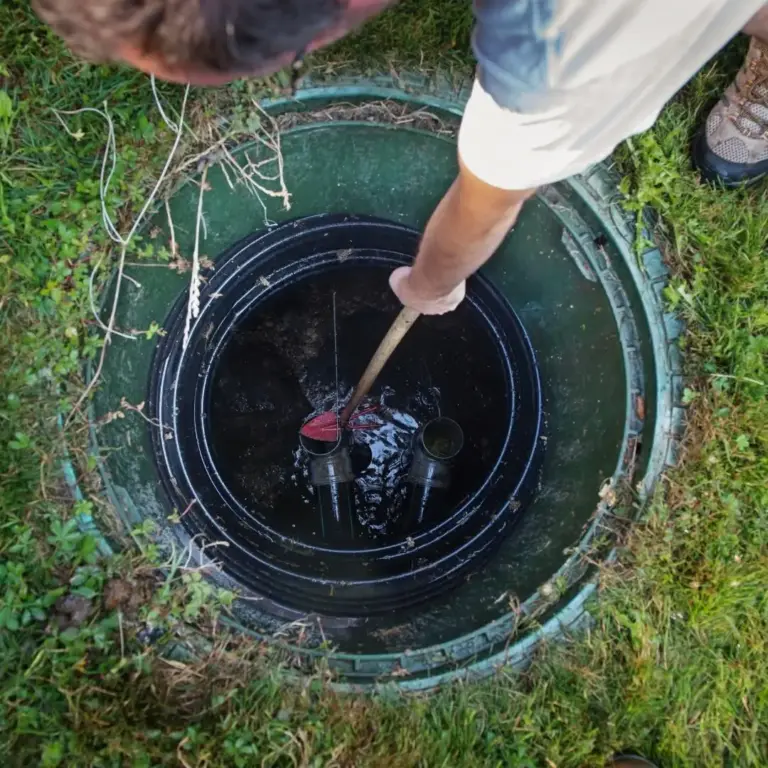
- Stay out of the tank. Penn State Extension warns that the gases in a septic tank can kill. If you can reach the inlet baffle opening, Washington's Department of Health says you can check it for a clog and try clearing toilet paper and debris with a pole, taking care not to damage anything. Or call a professional.
- Mention it at the next pump-out. Whoever pumps the tank can look for it.
Why it's worth getting right
If your home is on a well, this matters twice. Washington's Department of Health warns that a failing septic system can contaminate well water and nearby waterbodies, and Penn State Extension notes that septic failure can contaminate groundwater and surface water and lead to costly repairs. The department's comparison is the one to remember: maintenance runs a few hundred dollars every few years, while repairing or replacing a failed system can cost thousands.
Bleach and household cleaners
People worry that any bleach will kill a septic system. The guidance is more specific than that. EPA and Washington's Department of Health both warn against pouring large volumes of toxic cleaners down the drain, and EPA explains why: the system depends on a collection of living organisms that digest and treat household waste, and pouring toxins down the drain can kill them.
So the concern is volume. Pouring leftover cleaner or chemicals down a drain is exactly what to avoid. Use cleaners as the label directs, and never use a drain to get rid of extra.
Is your toilet paper septic safe?
Toilet paper is the one thing besides human waste that EPA and Washington's Department of Health both say belongs in the toilet. Neither one calls for a special brand. Their rule is human waste and toilet paper, and nothing else.
What Penn State's research adds is that toilet paper is a slowly biodegradable solid. It does break down, but slowly, so it adds to the sludge layer over time. That's one more reason the tank needs regular pumping, and one more reason to keep everything else out of it.
Septic tank additives
Additives promise to break down solids so you can pump less. The guidance is consistent:
- Washington's Department of Health says additives sold in stores aren't necessary and don't reduce or eliminate the need for routine pumping.
- Penn State Extension says biological and chemical additives aren't needed, and that relying on them instead of pumping can lead to failure of the whole system.
- Washington's septic rules don't allow an additive to be used unless the Department of Health has specifically approved it.
We don't recommend them. The bacteria a tank needs are already in it.
Water counts too
Too much water at once is its own kind of problem. When a tank gets flooded, it doesn't have time to settle, and solids get pushed toward the drainfield. EPA's guidance:
- Spread laundry across the week. Doing all the laundry in one day doesn't give the tank time to treat waste and can flood the drainfield.
- Fix leaks. A single leaky or running toilet can add as much as 200 gallons of water a day.
- Use efficient fixtures. Newer high-efficiency toilets use 1.6 gallons or less per flush, compared with 3.5 to 5 gallons for many older toilets. ENERGY STAR clothes washers use about half the water of standard models.
RVs and boats
Washington's Department of Health notes that RV and boat waste dumped into a home septic system fills the tank with solids faster. EPA also has guidance for RV and boat owners on the dangers of chemical additives, such as holding tank deodorizers. If you dump an RV tank at home, know that it's adding to your tank's load, and plan your pumping around it.
Make it easy for everyone in the house
Most septic damage comes from habits, and habits are easier to change when the right choice is the easy one.
- Put a small trash can with a lid in every bathroom.
- Keep a can or jar by the stove for grease.
- Tell guests and new household members the rule: human waste and toilet paper only.
- Keep chemicals for the hazardous waste drop-off, not the utility sink.
When was your tank last pumped?
Even a careful household fills a tank over time. Pump Check gives you a month to aim for.