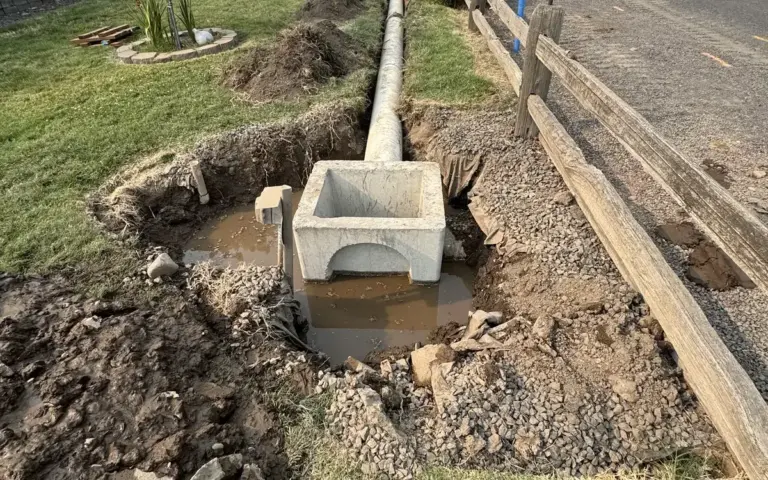
The septic tank gets the attention, but the drainfield does most of the work. It's where the liquid leaving the tank soaks into the soil and gets treated. When a drainfield fails, Washington's Department of Health says it may be the end of life for that part of the system, and the fix can be a replacement drainfield. Most of what keeps a drainfield working comes down to three things: keep solids out, keep extra water off, and keep weight off.
How a drainfield works
EPA describes the drainfield as the part of the septic system that removes contaminants from the liquid coming out of the tank. The liquid spreads through pipes or chambers laid in the soil, sinks in, and microbes in the soil treat it, as Penn State Extension describes. That treatment depends on the soil staying open to air. EPA notes that oxygen is critical to the bacteria in a septic system and to the breakdown of sewage by soil microorganisms.
Over time, a layer of bacteria called a biomat forms on the bottom and sides of the drainfield trenches. EPA explains that solids pushed out of the tank thicken that layer and can clog the pipes. Once a drainfield is badly clogged, Penn State Extension notes, pumping the tank alone won't clear it.
Rule one: pump the tank on schedule
The single best thing you can do for a drainfield is keep solids from reaching it. A septic tank holds solids until it gets too full. After that, solids ride out with the liquid and clog the drainfield. Pumping on schedule is how you stop that. See How often should you pump a septic tank for a chart by tank size and household, and keep up with the inspections Washington requires: at least every three years for a system that's only a septic tank and a gravity drainfield, and every year for all other systems.
Keep extra water off it
A drainfield can only take so much water. EPA says excess water slows down or stops the treatment process, and Washington's rules require owners to protect the system from surface drainage and direct drains.
Roof drains, driveways and sump pumps
Washington's Department of Health says water from roof drains, driveways, patios and sump pumps should be diverted away from the septic tank and drainfield. Washington's rules name footing and roof drains specifically. The department also recommends keeping the soil over the system slightly mounded so surface water runs off.
Sprinklers and irrigation
Eastern Washington lawns and gardens run on irrigation through the summer, and a sprinkler aimed at the drainfield adds water the soil has to absorb on top of the wastewater it's already handling. Aim sprinkler heads away from the drainfield, and don't run irrigation lines across it.
Water from inside the house
Every gallon down the drain ends up in the drainfield. EPA recommends spreading laundry through the week instead of doing it all in one day, which it says can flood the drainfield. EPA also notes that a single leaky or running toilet can add as much as 200 gallons a day. Fix leaks quickly.
Keep weight off it
Weight compacts the soil over a drainfield, and compaction can damage the pipes underneath.
Vehicles and equipment
EPA says not to park or drive on the drainfield. Most drainfields are built in open lawn areas and aren't designed for vehicles or heavy equipment, and the weight compacts the soil and can damage pipes. That includes trailers, RVs, farm equipment and the excavator for a project somewhere else on the property.
Livestock
On rural properties, livestock count as weight too. Washington's rules list soil compaction by vehicle traffic or livestock as something owners must protect the system from, and the Department of Health says to keep vehicles, heavy equipment and livestock off the septic tank, the drainfield and the replacement area.
Buildings, patios and pools
EPA says not to lay concrete or asphalt over a drainfield, because hard surfaces reduce evaporation and the supply of oxygen to the soil, and not to build any structure on it without checking with a designer or the permitting authority. Washington's rules require owners to protect the system from cover by structures or impervious material. Before you plan a shop, a patio, a garden or a pool, find out where the system is.
Plant the right things
What grows over a drainfield matters, because roots can reach the pipes.
- Grass is the best cover. Washington's Department of Health says so, and EPA recommends native grasses and ground covers.
- Keep trees and shrubs away. EPA notes that tree and shrub roots can tangle and damage drainfield pipes. A septic professional can tell you how far away to plant for your system and landscape.
- No vegetable gardens on the drainfield. EPA says vegetables there can be exposed to sewage effluent and may not be safe to eat.
- No plastic sheeting or concrete over it. Washington's Department of Health says not to put concrete or plastic over a septic system.
Protect the reserve area too
Many properties have a second piece of ground that matters as much as the drainfield. Washington's rules define a reserve area as land approved for a replacement septic system, protected and maintained for the day the current one fails. The rules require owners to protect it from the same things as the drainfield: structures, hard surfaces, drainage, compaction and grading. The Department of Health calls it the drainfield replacement area.
If you don't know whether you have one, the county's record drawing may show it. In Walla Walla County, the Department of Community Health has location diagrams for septic systems (509-524-2650).
Season by season in Eastern Washington
Spring
Snowmelt and spring rain can send a lot of water across a property. Walk it after a big melt or a hard rain and watch where the water goes. If it runs or pools onto the drainfield, find a way to divert it, but don't cut or fill soil over the system itself. Washington's rules require owners to protect it from soil removal and grade changes. Washington's Department of Health suggests that if heavy rain leaves water sitting around your septic system, you hold back on water down the drains until it drains.
Summer
Summer is irrigation season and RV season. Keep sprinklers off the drainfield. If you dump an RV or boat holding tank into your home system, Washington's Department of Health notes that it fills the septic tank with solids faster, so plan your pumping around it. Summer is also when a warning sign is easiest to spot: EPA and the Department of Health both list bright green, spongy grass over the drainfield, even during dry weather, as a sign of failure.
Fall
Harvest and project season means heavy equipment moving around rural properties. Keep it off the drainfield and the reserve area. Leaves are worth a look too: EPA notes that roof vents can get clogged with leaves and debris, which can cause odors.
Winter
EPA notes that a vent pipe can freeze during long cold spells, which can cause odors inside or outside the house. And the rule about vehicles doesn't take the winter off. Don't drive or park on the drainfield, frozen or not.
Signs your drainfield is in trouble
Washington's Department of Health lists the signs of a failed or saturated drainfield: sewage backing up into the house, wet or soggy areas over or near the drainfield, spongy bright green grass, and odors near the tank or drainfield. EPA adds that soft, wet or spongy soil around the drainfield, especially when there hasn't been significant rain, is a good indication of failure. We cover the full list in Signs your septic tank is full.
If your drainfield is failing
Not every struggling drainfield is finished. Washington's Department of Health says that if too much water has saturated a drainfield, from heavy water use or flooding, it may be possible to dry it out and bring it back. If it has failed, the options are connecting to public sewer where that's possible, or installing a replacement drainfield.
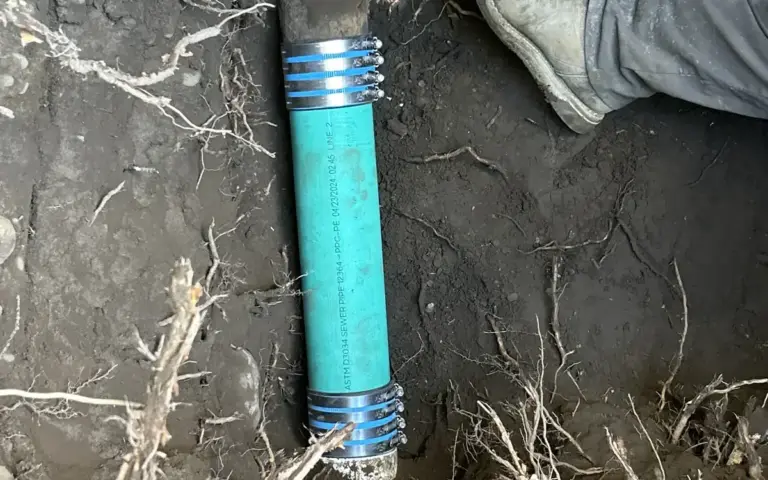
Repairs and replacements need approval from the local health department before work starts, under Washington's rules. Every repair we do is quoted on site, in writing, before any digging starts, and we run our own excavator. The truck that finds the problem and the excavator that fixes it come from the same yard.
If cost is the obstacle, Washington's Department of Health lists Craft3, a nonprofit lender that offers loans in several counties; low-interest loan and grant programs at some local health departments; and USDA home repair programs for those who qualify.
Worried about your drainfield?
We'll look, locate and measure, then quote any repair in writing before we dig.