Every septic job starts the same way: somebody has to get to the lid. If yours sits at ground level, that takes a minute. If it's buried, it can take a lot longer, and it happens again at every pump-out and every inspection. Washington requires a system that's only a septic tank and a gravity drainfield to be inspected at least every three years, and every other system every year, so a buried lid is a cost that keeps coming back. Here's how to find yours, how to do it safely, and why a riser is worth adding while it's open.
Start with the paperwork
Before anyone picks up a shovel, look for a map. Washington's Department of Health suggests starting with your local health department, which likely issued the permits for your system, and those permits may include a map of where the tank sits.
- In Walla Walla County, contact the Department of Community Health for location diagrams of your septic system: 509-524-2650.
- Check your own files. Past pumping and inspection receipts may include notes on where the tank is.
- Ask the seller or the previous owner. Washington's seller disclosure statement asks when the system was last pumped and inspected, and by whom. Whoever did that work may have notes on where the lid is.
Follow the sewer line from the house
If there's no map, the house is the best clue. The tank sits on the sewer line between the house and the drainfield.
Find where the sewer leaves the house
In a basement or crawlspace, look for the main sewer pipe where it goes through the foundation wall. Outside, look for a cleanout, usually a capped pipe sticking a few inches out of the ground near the house. Either one tells you which direction the line runs.
Probe along that line
A thin metal rod pushed gently into the soil can find the top of a concrete tank or lid. Probe in a line out from where the sewer leaves the house, and go easy. You're looking for a solid surface, not trying to force through anything. If you plan to dig, call 811 first so buried utility lines get marked.
Look for clues in the yard
If the tank's inspection ports were ever extended to the surface, they look like short capped pipes, and Penn State Extension notes those ports sit above the inlet and outlet baffles. A rectangle of lawn that looks different from the rest, or marks from a previous dig, can point the way too.
When to call instead
Washington's Department of Health notes that many systems are completely buried, so yours may not have lids at the surface at all. If the county has no record and probing doesn't turn anything up, a septic company can find it. When a lid is buried, we locate it with a probe and a measurement off the cleanout, then hand-dig it.
How deep is a septic tank lid?
There isn't one answer. It depends on how the system was installed and how the yard has been graded and landscaped since. The county's record drawing is the best place to start, and the person who pumps the tank can tell you how deep yours was once it's found. Write it down for next time.
Safety comes first
Washington's Department of Health is blunt about it: people do fall into septic tanks, and the department points to a child's death as a reminder to check for damaged or missing lids. Its precautions:
- Know where your septic lids or covers are.
- Check the condition of the lids regularly.
- Repair or replace damaged or missing parts.
- Use bolts, screws or other locks to secure the lids.
- Never drive or park on top of a septic system. It can damage or dislodge a cover.
- Never leave an open lid unattended, and make sure lids are secured after any work.
- Teach children that septic lids are not for playing on or opening.
The department also notes that septic system owners are responsible for making sure their systems are safe, including having a secure lid on the tank.
And never go into a septic tank. Penn State Extension warns that the gases inside can kill.
What a septic riser is
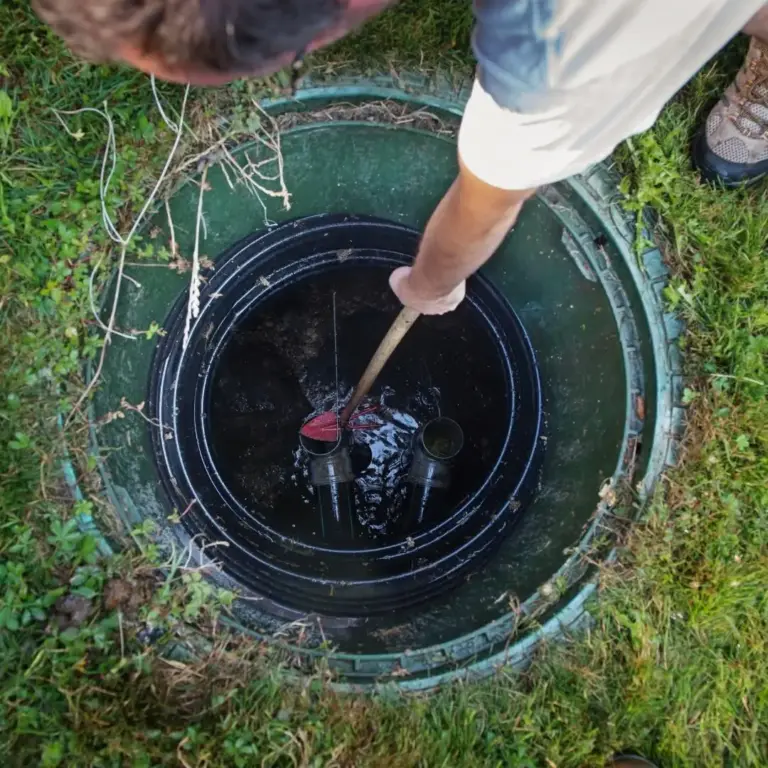
A riser extends the opening of the tank up to ground level, so the lid sits at the surface instead of underground. Penn State Extension recommends installing risers from the tank's central access ports and inspection ports to the soil surface, so future cleaning and inspection are easier, and marking the location of the tank.
A riser at grade ends with a lid at the surface. That lid should be secured the way the Department of Health describes, with bolts, screws or a lock.
Why a riser pays off
- Every visit starts faster. With the lid at the surface, there's no probing and no digging. That matters on a schedule that brings someone back every few years, or every year for systems with pumps or treatment units.
- The yard stays put. No hole in the lawn at every pump-out.
- You can see the lid. The Department of Health asks owners to check their lids regularly. You can't check what you can't see.
- The lid can be secured. A riser lid at the surface can be bolted, screwed or locked, the way the Department of Health recommends.
- Inspections get easier, whoever does them. Washington's Department of Health notes that you can hire a professional for the required inspection or, if your local health department allows it, do it yourself. Either way, it starts at the lid.
What a riser doesn't change
A riser makes the tank easy to reach. It doesn't change how often the tank needs pumping or the inspection schedule Washington requires. Those still depend on your tank size, your household and the type of system you have. See How often should you pump a septic tank for a chart.
When to add one
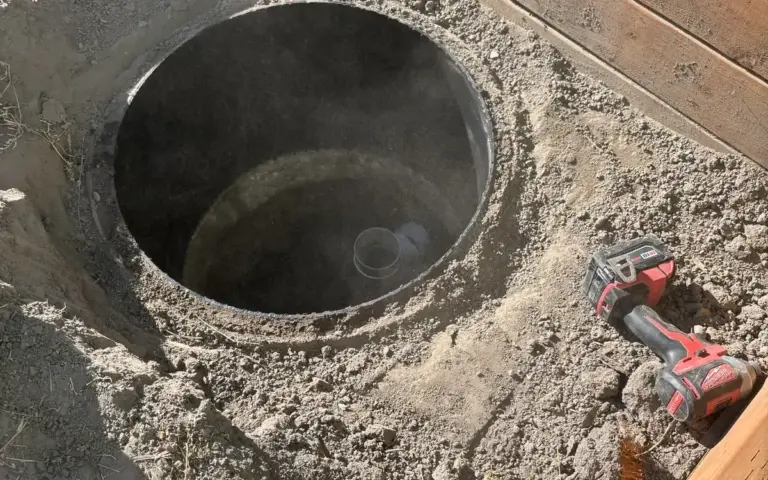
The best time to add a riser is when the lid is already dug out for a pump-out or an inspection. The digging is done, the tank is open, and the riser goes on before the hole is filled back in. Ask about it while it's open.
Two compartments, two openings
Many septic tanks have two compartments, and a tank can have more than one opening: large central access ports for pumping, and smaller inspection ports above the inlet and outlet baffles. Penn State Extension explains that a tank must be pumped through the large central access ports, not the small baffle ports. Pumping through a baffle port can damage the baffle and leave sludge and scum behind.
That's why we pump both compartments on every pump-out, not just the first one, because solids collect in the second compartment too. Risers on the access ports make that easy every time.
Mark it and record it
Once the lid is found, don't lose it again.
- Mark it. Penn State Extension recommends marking the tank's location so it can be found easily for future pumping.
- Measure it. Write down the distance from two fixed points, like a corner of the house and the cleanout.
- Keep a diagram. Washington's Department of Health recommends knowing where your system is and keeping a diagram of its location, along with a record of maintenance.
Those records help the next person who services the system, and the next owner of the house.
Lid buried? We'll find it.
We locate buried lids, dig them out, and can add a riser while it's open.